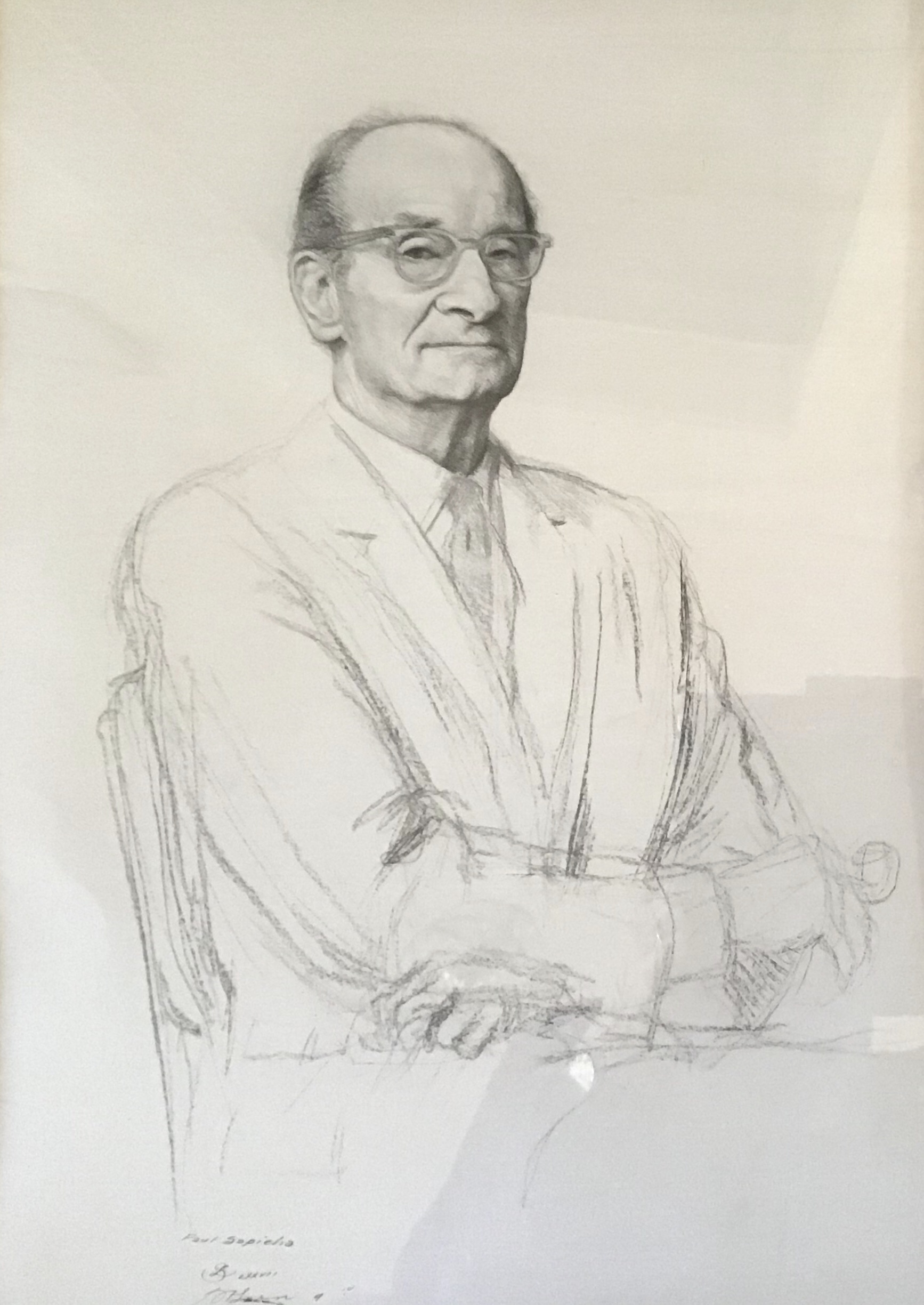
Paul Sapieha
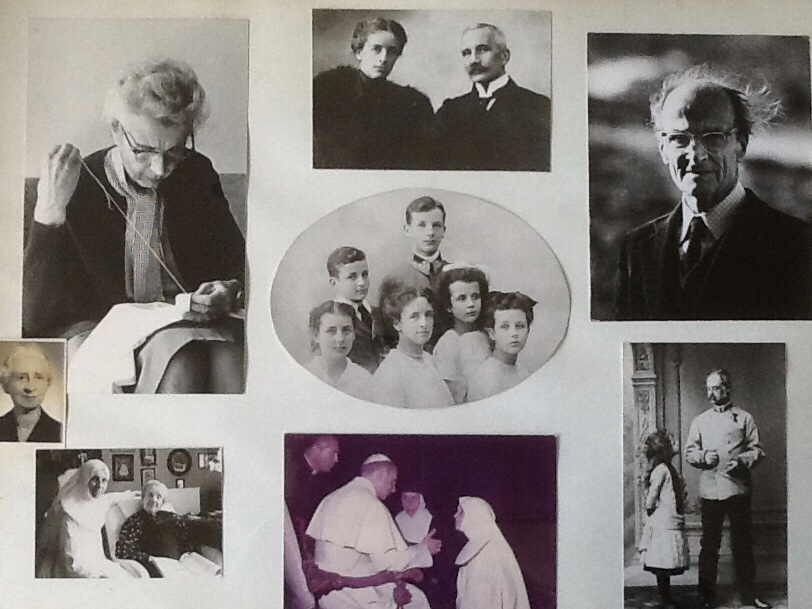
This website has been created using various documents, autobiographical recordings, and personal reminiscences. Below is a short biography of Paul Sapieha. Various pages have different resources.
Paul Sapieha (1900–1987) was the fourth of five children, born in Galicia, at that time part of the Hapsburg Empire. He died in Munich in 1987, having lived in Trebbio, near San Piero a Sieve in Tuscany, Italy, for the last 17 years of his life.
In 1909 he was sent to Downside (not speaking a word of English). He told his daughter, “the monks just let me play around for the first months I was there until I learned English.”
He was at home in Poland in August 1914 when the First World War broke out, and he instantly became an ‘enemy alien’ and could not return to Downside. He was sent to an Austrian Academy in which the aristocrats wore crowns on their jackets and the Jews wore stars of David. He got himself expelled by setting fire to the pillows in his dormitory and throwing them out the window.
He finished his education in Lwów (Lemberg) and joined the cavalry (8th Uhlans). He was wounded (possibly the battle of Komarow?).
Around 1924 he was at the University of Grenoble, School of Forestry, when he first met Virgilia (Gilly) Peterson. She was doing her Junior Year abroad. Both sets of parents were appalled and nothing came of it at the time.
Some 9 years later, during which he farmed and travelled, he wrote to Gilly to say that he could now marry her. They were married on 1st July 1933 in the Lady Chapel of Westminster Cathedral in London. They lived in Siedliska in South Eastern Poland until the outbreak of the Second World War. They had two children – Christine (b. 1934) and Nicholas (b. 1937).
At the outbreak of War, Gilly took the children via Romania to Mesurberen in Hungary where they stayed with a cousin. Paul and Gilly went to Paris where the remains of the Polish Army had gathered. In May of 1940 they sailed from Genoa to New York.
In early 1943 (after Pearl Harbour) Paul was able to join the American Army. He served in Europe and North Africa in various Intelligence capacities. Immediately after the war he was involved in the return of the Wit Stwosz altarpiece to Kraków.
In 1952 he rejoined the US forces and was sent to Korea.
In 1954 he joined the International Committee on European Migrations (ICEM) in Athens and lived in Athens for the next 10 years.
He continued to work for various refugee agencies, moving to Munich in the middle of the 1960s and then to Trebbio in 1970.