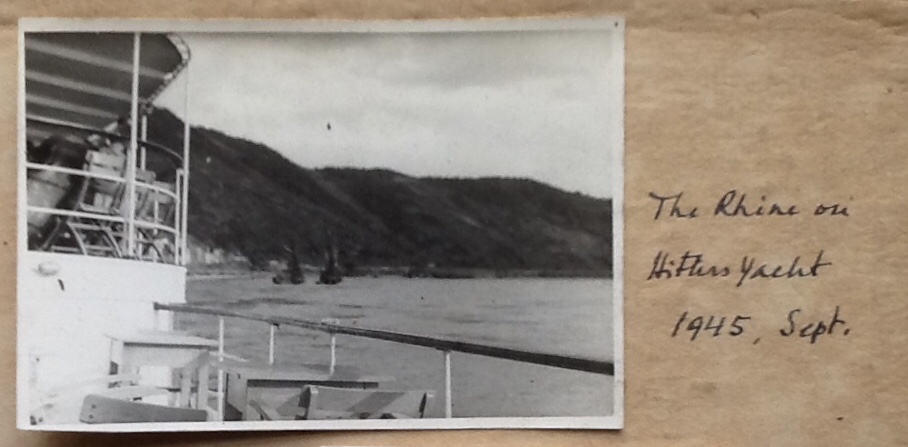
Tape 3 Side 2
I can’t remember now exactly what I said before, so I’ll have to put in the other tape and see …
I want to go back to Paris for a moment – about the 28th or 29th of August, about four or five days after the liberation, Sibert told me that I have to lead General Eisenhower into Paris and to de Gaulle’s headquarters.
So, I got into my jeep and, of course, it was rather a hard ride for me because the road wasn’t very good and Eisenhower, of course, rode in his big Cadillac which went over these bumps and things much easier than my jeep. I bumped in, however, and went to the Ministry of War where de Gaulle had his offices.
I remember when we went in, there was only de Gaulle’s ADC, waiting for us at the bottom of the stairs and then we went upstairs to a sort of an ante-room. There was another officer there. I don’t know who he was, and then the door opened and I saw through the door de Gaulle, just like Mussolini had been described, standing behind his desk and waiting for Eisenhower to cross the room and shake hands with him.
Of course, de Gaulle then was already acting as Chief of State, and not as a Brigadier General, so one can forgive him this, and one can not only forgive him but, I suppose, I mean, he was right from the protocol point of view. In any case, it was rather queer in our eyes because, after all, if it hadn’t been for Eisenhower, de Gaulle wouldn’t have been there, altogether.
However, they had a talk for about twenty-five minutes, I think, not more … Half an hour, and then Eisenhower came out and, again, de Gaulle didn’t come as far as the door with him but just let him go out, and we drove away.
Now, in-between then, and the liberation, there was that scene at Notre Dame where de Gaulle was present at a big service for the liberation and so on, and where somebody started shooting from up above, from the gallery. I don’t know how … That whole story seems to me to be very confused and, I think, not even in Is Paris Burning? is that described quite accurately.
In any case, I remember very well – when de Gaulle came to the Unknown Soldier at the Arc de Triomphe, with all those generals standing around and so on, he never smiled for one moment – not even when he drove away from the Gare de Montparnasse in that big open car and where the crowds were so enthusiastic and were screaming and yelling, “Vive de Gaulle” and so on, did he smile for one moment. He just stood there like a wooden piece of statue and, I suppose, it was the way to handle the French – I don’t know …
I mean, when I look at it now, from these years of de Gaulle’s regime in France, I suppose it was the way to handle them because, first of all, he was so hurt by the way the French behaved and by the German victory in 1940, that he had no use for the French public – that’s one thing; and the other thing is that he was so imbued with this need to restore dignity and confidence in the French, that he never let up for one moment.
The whole oeuvre of de Gaulle’s policies during his reign, as I would call it, was dictated by the same token and that is the shame of the French defeat in 1940 had to be obliterated and not only within the minds of his own people, but also in the minds of Europe and of America. I think his stiff lip and his way of treating the Anglo-Saxons and so on – all this was dictated by that one wish to put France back on the map which it certainly wasn’t during the Fourth Republic.
Whether this is good or bad, history will judge – but, in any case, I believe if Europe is to be what we all hope it will be, that is to say, a potent third power in this world, I think it will be de Gaulle’s merit because Europe without France, or with a France that was weak and divided, is silly.
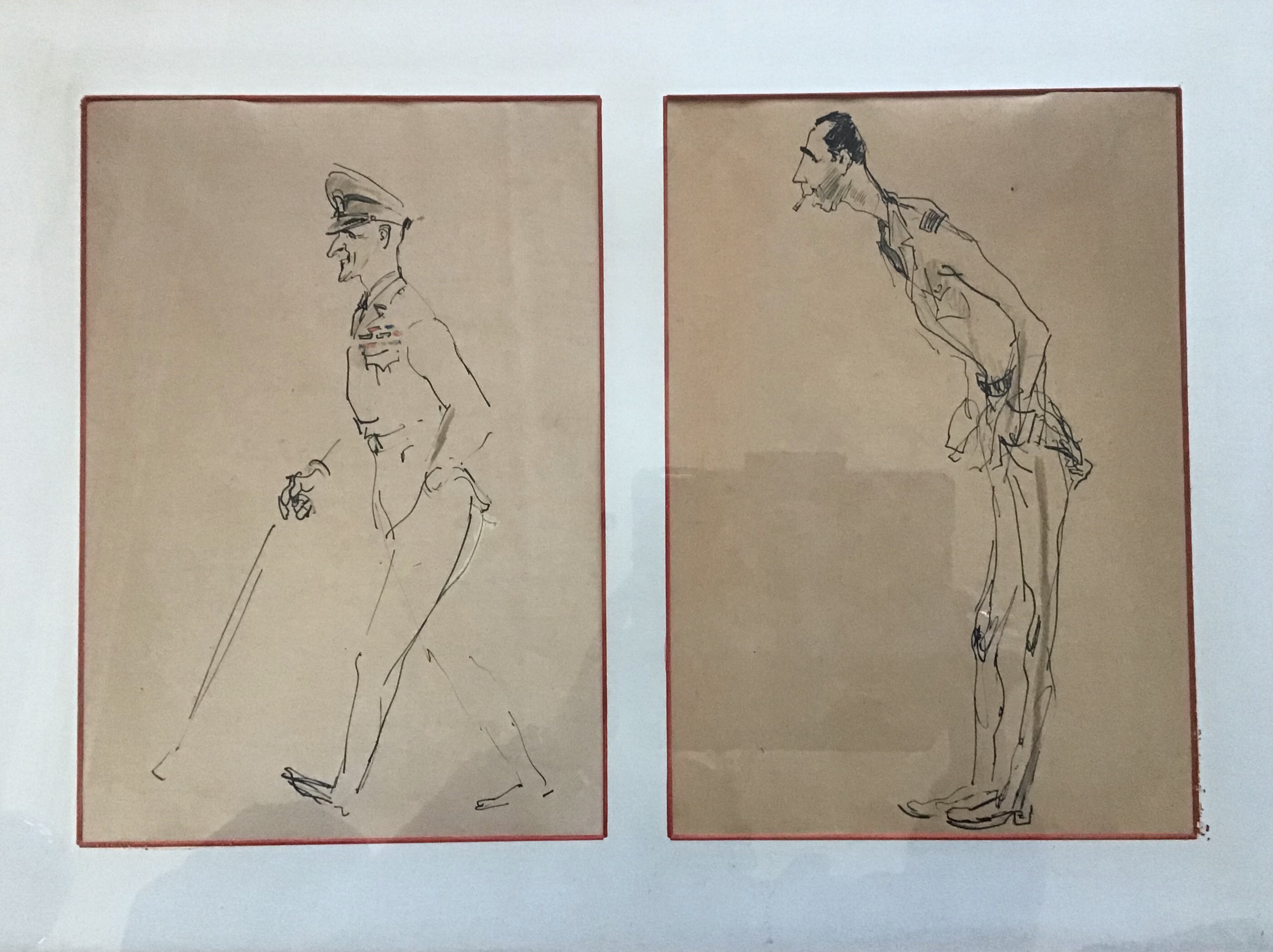
Whilst I was in Paris on 15th or 16th of December, Rundstedt moved and went right straight through a gap in the lines and got quite far into Luxembourg.
I rushed back and came back to Verdun, and there was, just at that moment when I got back there, a meeting between Bradley, Eisenhower, and Patton was present and, of course Hodges, the First Army commander, and they were discussing in front of the map what had happened when, all at once, Patton got up, hit the table with his stick (he always carried a stick), and he said, “This is perfectly wonderful because I should get them from [the south], and I shall shoot them up like ducks.”
Everybody was silent, of course, for a moment, then Eisenhower laughed and said, “Well, General Patton, let’s get going.” So, Patton went back to his headquarters. He stopped his offensive into the Saar; he got three divisions up into the flank of Rundstedt. Hodges got some divisions into the other flank and, in fact, they started really shooting up these Germans like ducks from both sides.
I remember so well – there’s a very fancy hotel called the Château Barden, and I went up there to see what was going on. I found the hotel completely empty except for the manager who told me that there were some German tanks about a mile away, and they might be moving on in the night, and I said, “Alright, just give me a warm room, and give me some dinner, and if one of these tanks starts moving, you’ll know it – just come and wake me up and I’ll get out.” So, I had a very good dinner, and then went to bed and slept till seven in the morning, and nothing had happened.
When I got down to breakfast, I asked the manager, “What happened to this tank?” and he said, “It’s still there but it can’t move because it has no petrol.” And so, the crew has left it and that’s where it is. So I drove down to see it, and that was perfectly true. There were two tanks there – in fact, one in front of the other, and they both couldn’t go on, and the crews had gone.
In any case, by about 10th of January, Bastogne was relieved. As you remember, that was the general who, when the Germans asked him to surrender, said, “Nuts to you,” and stayed in, and one of our armoured divisions pushed through and opened up Bastogne again, and Sibert picked me up, and we went there right away.
It was quite a sight – this beleaguered city. I think it was beleaguered for about three weeks with troops being flown in by gliders and a lot of broken-up stuff around it.
And then we moved up from Luxembourg. Our headquarters moved to Namur because Rundstedt’s guns were quite close to Luxembourg and Army Group Headquarters were in the line of fire.
I forgot to mention that, by then, about February 1945, I was already a lieutenant colonel. I was promoted to major right after Paris, and then in January I was promoted to lieutenant colonel which I still am today, and had received from Sibert the Bronze Star – I think for the Paris operation.
I must tell you some more about Prince Felix and about General Patton, also, when we get to that point.
Whilst we were in Luxembourg, I used to go quite often to see Prince Felix and he actually would accompany us with le Bel on our trips out to the front, also, quite a few times. He was very pleasant company. He was very quiet, and good-humoured. He had a good sense of humour, and was a most pleasant companion.
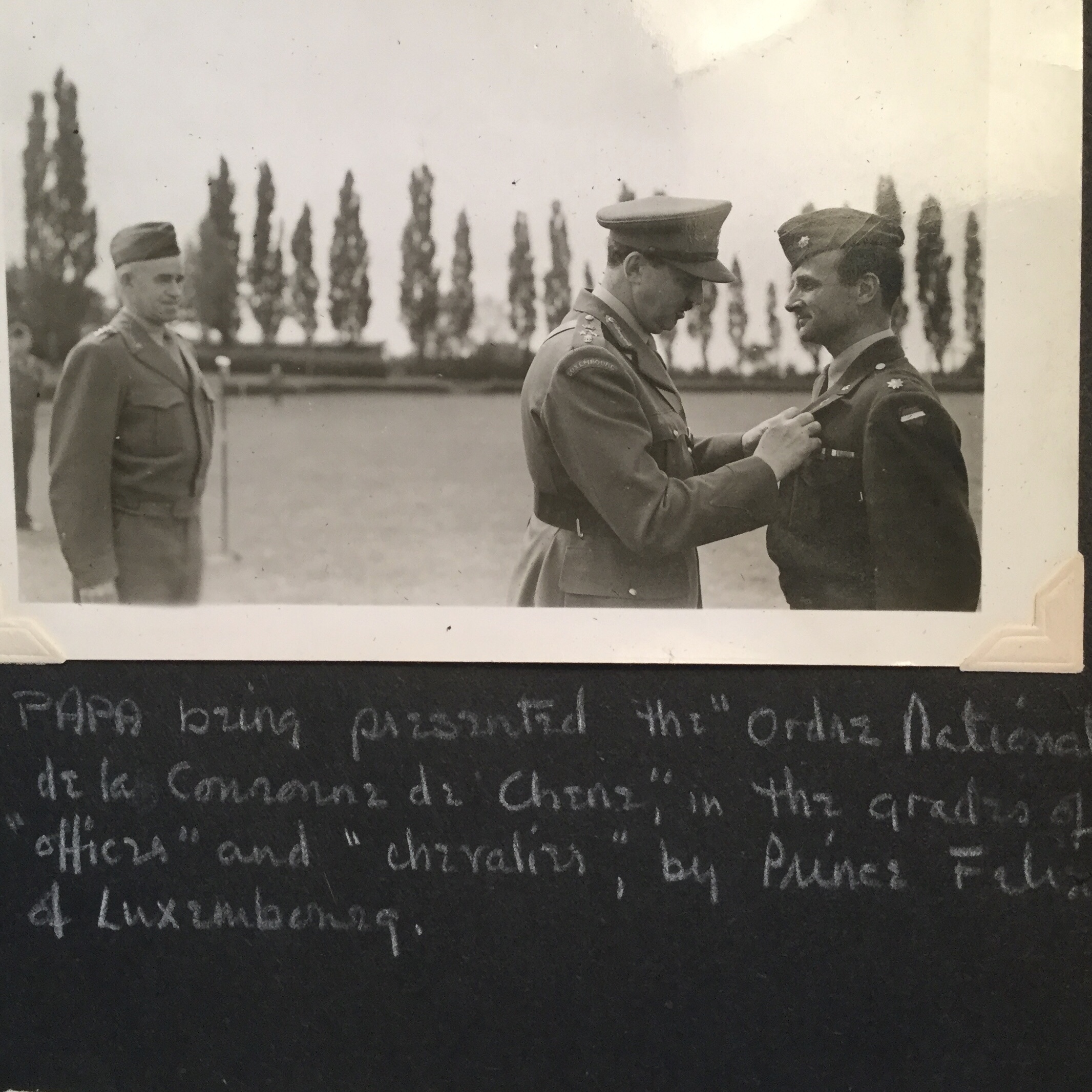
During our stay in Luxembourg, Prince Felix decorated General Bradley, of course, and Sibert and so on, and also gave me two decorations. One was the Cross of the Chevalier, and the other one was the Croix de Guerre of Luxembourg.
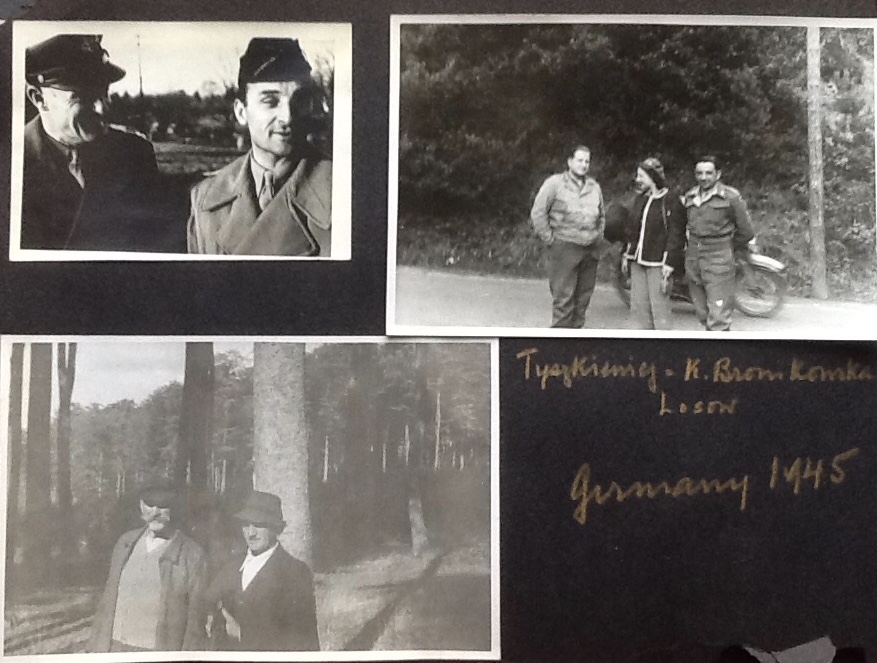
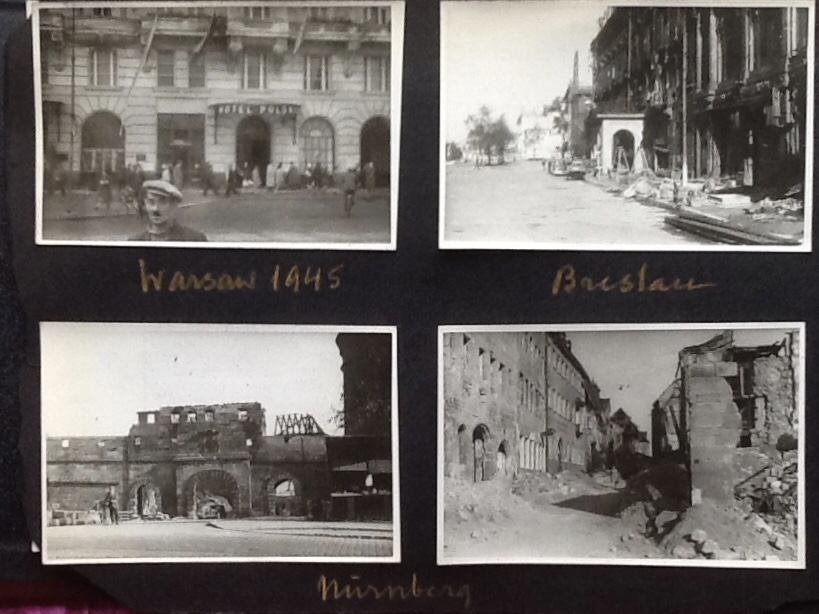
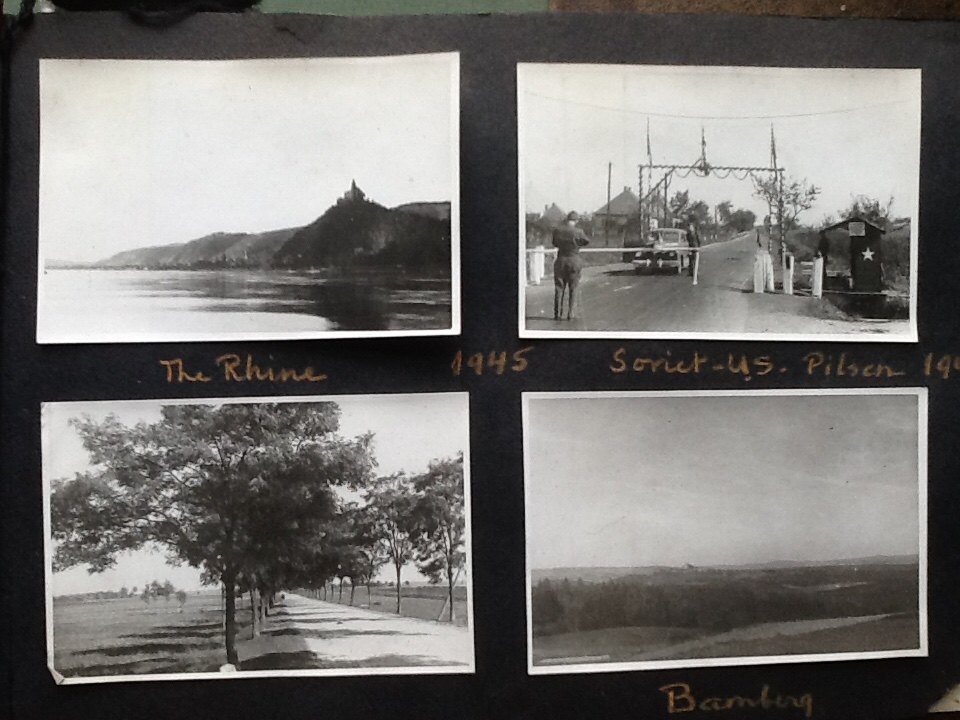
The following pictures are from 1945 and there is no narrative to go with them.